BACKGROUND: geographic information systems


Geographic information systems (GIS) were first developed in North America during the 1960s. Early applications focused on the display of natural or socioeconomic data, such as woodland ecology or population characteristics.

Initial investments in GIS technology were made by regional and national administrations and by utility companies. Software costs were generally prohibitive for all but the largest organisations.

During the mid-1980s software houses developed and released products better suited to business applications and users. The packages were significantly cheaper and easier to use than the first generation geographic information systems and focused more clearly on certain core GIS functions (typically display, query and overlay analysis). Examples include the MapInfo, Tactician and ArcView software products.

GIS software represents real world features (areas of woodland, pipelines and so forth) through the storage and manipulation of geometrical shapes and related attributes (such as the dominant tree type or pipeline diameter).

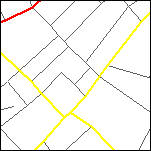
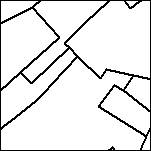
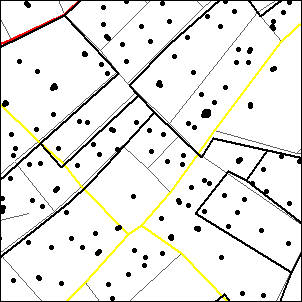
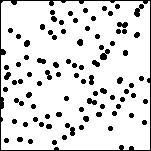
Vector data (consisting either of unique points, or sets of points linked together to form lines, polylines or polygons) can be used to represent a variety of features including, for example, postcodes, road networks or administrative boundaries.

Points
Crown Copyright
© Ordnance Survey


Points
Lines
Crown Copyright
© Ordnance Survey


Lines
Polygons
Crown Copyright
© Ordnance Survey


Polygons

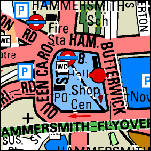
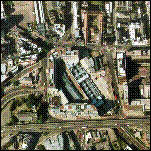
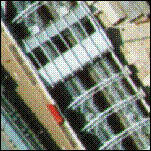
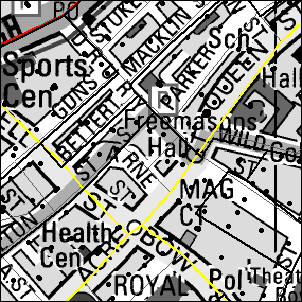
A fourth data type, raster data, holds continuous images - such as map scans or satellite imagery - for discreet (generally tiled) areas.

Map
© Copyright
Bartholomew
Aerial photograph
© Copyright
Cities Revealed
Aerial photograph
© Copyright
Cities Revealed

Vector data may be linked to attributes (such as town, road or county names) stored separately in a database. Raster data cannot be effectively linked to a database, and (in all but the most sophisticated image processing applications) is generally used only as a map backdrop.

The core functionality of a GIS is its ability to integrate, overlay and analyse multiple vector and raster data layers in one on-screen, or printed, map.

Vector
Crown Copyright © Ordnance Survey
Vector and raster
Crown Copyright © Ordnance Survey
© Copyright Bartholomew

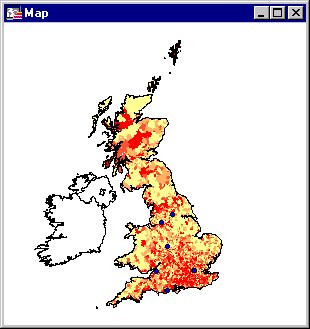
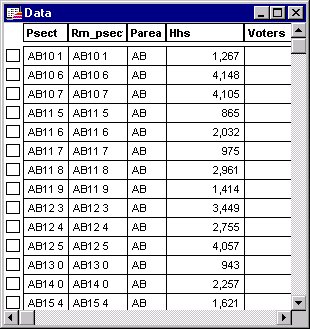
Maps offer a powerful visual metaphor, tending to reveal patterns and associations that are not evident - or are hard to detect - in tabular data views.

Visual representation
LIFESectors © Copyright Business Geographics

Visual representation
Tabular representation
LIFESectors © Copyright Business Geographics

Tabular representation

Business Geographics works with industry-leading companies in a number of sectors in both the UK and Europe. Our experience reveals several typical applications of GIS technology in both commercial and public sector organisations. In the UK and elsewhere in Europe, the availability of a wide range of data sets and the existence of a pool of skilled consultants has led to high take up rates for geographical information systems across a range of organisations.

Business Geographics works with both public and private sector organisations seeking to implement a GIS strategy. Examples include: Business Geographics provides the software and data for mapping, targeting and planning - helping organisations to build and run geographic information systems for the desktop, Internet and intranet.

If you would like Business Geographics to help you develop your geographic information system strategy please either contact the office or send email to info@geoweb.co.uk.


© Copyright Business Geographics Limited